
Cet article n'est pas encore disponible dans votre langue. Il est affiché en anglais.
Overview
The Iran–Israel proxy conflict is a prolonged confrontation between Israel and the ruling regime of Iran. Its central feature has been the regime’s cultivation of armed organizations outside Iran that can threaten Israel, American forces and regional shipping. Iran’s Islamic Revolutionary Guard Corps (IRGC), particularly its Quds Force, supplied, trained and coordinated partners across several countries. These relationships gave the regime ways to attack adversaries and expand its influence while reducing the immediate risk of retaliation against Iranian territory.
The network, commonly called the Axis of Resistance, includes Hezbollah in Lebanon; Hamas and Islamic Jihad in Gaza; the Houthis in Yemen; and militias in Iraq. Hezbollah, Hamas, Islamic Jihad and the Houthis are terrorist organizations. Their theaters have distinct local histories and leaderships, but Iranian funding, weapons transfers and military cooperation connect them to a wider campaign against Israel. The conflict has also involved Israeli air and naval strikes, intelligence operations, attacks on American forces, and efforts to defend civilians from rockets, drones and missiles.
The confrontation changed sharply after Hamas’s October 7, 2023, massacre in Israel. Iranian-aligned organizations attacked or threatened Israel and its partners from multiple directions while Israel fought Hamas in Gaza. Direct Iranian and Israeli strikes followed in 2024. In June 2025, Israel and Iran fought a 12-day war that ended in a ceasefire without resolving the regime’s nuclear program, missile arsenal or regional proxy network.
Background
The 1979 Islamic Revolution established a ruling regime that defined itself in opposition to Israel and the United States. Iranian leaders have called for Israel’s destruction for decades, even though Iran lies roughly 2,000 kilometers away, with other countries between them. Hostility toward Israel became a durable part of the regime’s external policy rather than a response to any shared border. The regime developed military partnerships beyond Iran’s territory to project force toward Israel and contest American influence across the Middle East.
Hezbollah became the regime’s longest-established and most reliable armed partner. Built in Lebanon with Iranian assistance in the early 1980s, it fought Israel, accumulated rockets and missiles, and offered Iran a powerful position near Israel’s northern frontier. The 2006 Lebanon War demonstrated the danger of sustained rocket fire against Israeli communities. Hezbollah subsequently expanded its arsenal and pursued precision-guided weapons with Iranian help. Iron Dome protected Israelis against many incoming rockets, but its battlefield success also pushed Iran and its partners to seek weapons capable of hitting selected targets and to plan larger barrages that might overwhelm defenses.
The 1980–1988 Iran–Iraq War shaped two central figures in the regime’s external operations: Qasem Soleimani and his eventual successor, Esmail Qaani. Both gained military experience during that war before leading the Quds Force, the IRGC’s foreign operations unit. Soleimani became the principal builder and coordinator of relationships with Hezbollah, Iraqi Shia militias and the Houthis. He used these organizations to pressure the regime’s adversaries and help turn separate armed groups into a regional strategic network.
Iraq became another major arena after the 2003 invasion of Iraq. Within weeks of the removal of Saddam Hussein, the Iranian regime began orchestrating attacks that killed American and British soldiers. The later common fight against Islamic State did not reconcile Tehran with the United States or its allies. Instead, the regime used that war to enlarge its military and political influence in Iraq and Syria. Iranian-aligned militias also constrained Iraqi leaders seeking to pursue national interests and balanced foreign relations.
The 2015 Joint Comprehensive Plan of Action (JCPOA) addressed Iran’s nuclear activities, including uranium enrichment and monitoring. It did not dismantle Hezbollah, halt the regime’s arms routes or end its support for attacks on Israel. Nuclear restrictions and the proxy threat concerned different parts of Iran’s security policy; progress on enrichment alone could not end the regional confrontation.
Course of the war
During the Syrian civil war, Soleimani deployed Iranian-aligned forces to sustain Bashar al-Assad’s rule in Damascus. The regime used its position in Syria to move personnel, oil, supplies and weapons toward Hezbollah in Lebanon. Land corridors, airports and ports formed parts of this system. Iran pursued access to Latakia’s seaport as a Mediterranean foothold, while its shipments helped entrench a military presence across Syria. Keeping Assad in power preserved routes essential to Hezbollah’s rearmament.
Israel repeatedly struck weapons transfers, storage sites and Iranian military infrastructure in Syria to disrupt that buildup. During a two-week period in 2023, Israeli strikes repeatedly put the Damascus and Aleppo airports out of service, interrupting routes used to arm the regime’s partners. These operations formed part of a longer campaign to prevent advanced missiles and production equipment from reaching Hezbollah. The Syrian theater connected Iran’s strategic depth to a direct threat against Israeli cities and military facilities.
The conflict also developed at sea. Between 2002 and 2014, Israel seized at least four ships carrying Iranian weapons or ammunition destined for Hezbollah, Hamas or Islamic Jihad. The maritime confrontation intensified from 2019 as Iran increased illicit oil shipments that helped fund Hezbollah and the Quds Force’s foreign operations. Israel mounted a sustained naval disruption campaign against supply routes to Syria and Hezbollah, striking at least a dozen vessels bound for Syria, including shipments linked to Hezbollah’s precision missile program. After attacks on shipments using the Red Sea and Suez Canal, some vessels rerouted around Africa, disrupting deliveries to Syria.
Covert operations formed another front. Iranian efforts to infiltrate and surveil targets in Israel date to at least 2013. Israeli intelligence documented a sharp rise in Iranian recruitment of people inside Israel beginning in early 2020. Recruiters commonly approached people facing financial strain. Initial assignments included locating military bases and leaders and posting material intended to stir domestic dissent; the wider effort also sought surveillance and preparations for more serious operations. Israel, in turn, used intelligence and covert capabilities against Iranian weapons production and military infrastructure. A drone attack targeted a military plant in Isfahan in early 2023, shortly after the United States and Israel concluded the Juniper Oak exercise. Its timing did not establish a jointly planned operation: the strike also demonstrated Israel’s ability to act inside Iran independently.
An American drone strike killed Soleimani in Iraq in January 2020, dealing a strategic setback to the regime’s external operations. Supreme Leader Ali Khamenei instructed Qaani, Soleimani’s successor, to follow the same approach. The network Soleimani helped build survived his death. Its continuing reach became evident during the war that followed October 7.
By the time of Hamas’s October 7 massacre, Iran’s regional network had achieved a strategic effect: Israel faced threats from several directions while fighting in Gaza. Hamas and Islamic Jihad were the network’s Gaza node. Hezbollah opened a northern front with attacks from Lebanon, though Iran refrained during the early Gaza war from bringing it into an all-out confrontation with Israel. More than 70 days after October 7, senior Iranian officials publicly expressed confidence that Hamas would survive Israel’s campaign. Their expectation reflected the importance they attached to keeping that armed partner in place.
In Iraq, the regime’s network included Badr, Kata’ib Hezbollah, Asa’ib Ahl al-Haq and Harakat Hezbollah al-Nujaba. Groups using the Islamic Resistance in Iraq name repeatedly targeted Eilat during the war that began in 2023. Iranian-aligned militias also attacked American forces in Iraq, Syria and Jordan. By November 2023, they had carried out more than 40 attacks on American forces in Iraq and Syria. In response to attacks on its personnel, the United States struck militia and IRGC-linked facilities; in November, two American F-15s hit an IRGC-used facility in Syria.
The Houthis, who had seized Sanaa and much of Yemen in 2014–15, added a maritime front. After October 7, they threatened and attacked international shipping in the Red Sea while presenting their campaign as support for Hamas in Gaza. Their use of Iranian-provided drones and missiles also threatened Israel, including Eilat. Commercial vessels from many countries faced danger regardless of their connection to Israel, and shipping companies diverted traffic around Africa. In November 2023, the Houthis targeted an American Reaper drone amid wider Iranian-aligned attacks on American forces.
Proxy warfare gave way to direct interstate strikes in 2024. After an Israeli strike killed senior Quds Force officers in Damascus in April, Iran launched hundreds of drones and missiles directly at Israel. Israeli defenses, assisted by the United States and other partners, intercepted most incoming weapons. Israel subsequently struck Iran. These exchanges showed that the regime could no longer rely solely on armed partners to confront Israel while keeping Iranian territory outside the immediate battlefield.
Direct fighting escalated further in June 2025. Israel opened a 12-day campaign against Iranian military and nuclear-related targets, and Iran launched ballistic missiles and drones at Israel. Israeli intelligence enabled remotely controlled missile and drone systems positioned inside Iran to strike regime targets from within, including defenses that protected Iranian airspace. The United States later struck Iranian nuclear sites. Israel accepted a United States proposal for a bilateral ceasefire, which took effect on June 24.
Israel's conduct and the protection of civilians
Israel’s operations sought to interrupt weapons transfers and reduce the capacity of the Iranian regime and its partners to attack Israeli communities. Naval seizures targeted arms shipments; strikes in Syria targeted routes, storage facilities and military personnel; and the June 2025 campaign targeted Iranian nuclear-related and missile infrastructure, military command sites and forces taking part in hostilities. These operations took place across populated countries and active transport networks, where strikes could also affect civilians and civilian services. The military purpose of disrupting a supply route did not remove the need to consider those effects.
Defense of Israel’s population was a central part of the conflict. Iron Dome intercepted many rockets, while other air defenses and allied assistance helped defeat the large Iranian barrage of April 2024. Those defenses reduced harm but could not make missile or drone attacks harmless. Iran and its partners adapted by pursuing precision guidance and larger volleys, increasing the threat to homes, public infrastructure, ports and military bases. During the June 2025 war, Iran launched more than 550 ballistic missiles and more than 1,000 drones at Israel. Iranian strikes killed civilians, including children, and injured thousands of people treated in Israeli hospitals.
The October 7 massacre and subsequent attacks from Lebanon, Iraq and Yemen made civilian protection a regional problem rather than a matter of one border. Residents of northern Israel faced Hezbollah’s rockets and anti-tank weapons while families elsewhere faced attacks from Gaza, Iran and other directions. Air defenses, shelters, warnings and action against launch sites and supply routes served different parts of Israel’s response. The pressure to intercept simultaneous attacks also helps explain why Israeli planners treated Hezbollah’s expanding precision arsenal as a strategic threat.
Terrorist tactics and propaganda
Iran’s armed partners combined attacks on military forces with tactics that threatened civilians and commerce. Hamas’s October 7 massacre brought the network’s violence into Israeli communities. Hezbollah used rockets, drones and anti-tank missiles from Lebanon. Iraqi militias attacked American personnel and launched weapons toward Israel. The Houthis used missiles and drones against ships in a vital international waterway. These actions spread the costs of the confrontation across several countries and forced Israel and its partners to divide defensive resources among fronts.
The regime’s use of separate organizations also gave it room to manage escalation. A partner could attack an adversary while Tehran limited its own visible military involvement; the regime could then increase or reduce pressure in another theater. The early Gaza war illustrated this approach. Hezbollah attacked Israel repeatedly without entering an all-out war at that stage, while Iraqi militias struck American forces and the Houthis threatened Red Sea shipping. The organizations retained their own calculations and interests, so the network did not operate as a single army under uniform control.
Public messaging accompanied military action. Iranian leaders presented the regional axis as resistance to Israel and Western influence, while the Houthis framed attacks on international shipping as support for Hamas. Such claims did not change the character of attacks that endangered civilian ships or communities. Inside Israel, Iranian recruitment efforts also sought to influence opinion by assigning recruits to post material intended to stir domestic dissent. These information efforts ran alongside surveillance, weapons transfers and armed attacks rather than replacing them.
Outcome
The conflict had no single decisive outcome. Soleimani’s killing damaged the Quds Force’s leadership but did not end its network. Israeli interdictions and strikes disrupted Iranian supply routes, yet Hezbollah and other armed partners continued to threaten Israel. Hamas’s October 7 massacre triggered a wider regional confrontation; the resulting attacks showed the network’s reach and exposed its members to sustained Israeli and American military action.
The 2024 exchanges ended the earlier pattern in which direct Iran–Israel strikes were exceptional. The June 2025 war inflicted major damage on Iranian military and nuclear-related capabilities and demonstrated Israel’s ability to combine air power with intelligence operations inside Iran. Iran’s missile and drone attacks also inflicted civilian casualties and damage in Israel. The June 24 ceasefire ended that 12-day round of direct fighting. It did not settle the broader proxy conflict or eliminate the regime’s nuclear program, missile arsenal and regional partnerships.
Aftermath and legacy
The conflict established how closely Iran’s regional military policy links Gaza, Lebanon, Syria, Iraq, Yemen and maritime routes. Those arenas have their own politics, but the regime’s funding, training and weapons supply made their armed organizations useful in a common campaign against Israel and American influence. Israel’s campaign against transfers through Syria and by sea showed that logistics, weapons production and precision guidance could be as consequential as fighting at a border.
It also exposed limits in efforts to address one threat at a time. The JCPOA’s enrichment provisions did not end proxy warfare, and a ceasefire after direct strikes did not by itself dismantle the networks that sustained attacks. Russia’s military cooperation with Iran added a wider dimension: Russia used Iranian-made Shahed 136 and Shahed 131 drones against Ukrainian cities and infrastructure, while the two governments worked together to sustain Assad’s rule in Syria. The Iran–Israel confrontation thus remained connected to regional security, international shipping, the protection of civilians and a broader contest over Western influence.
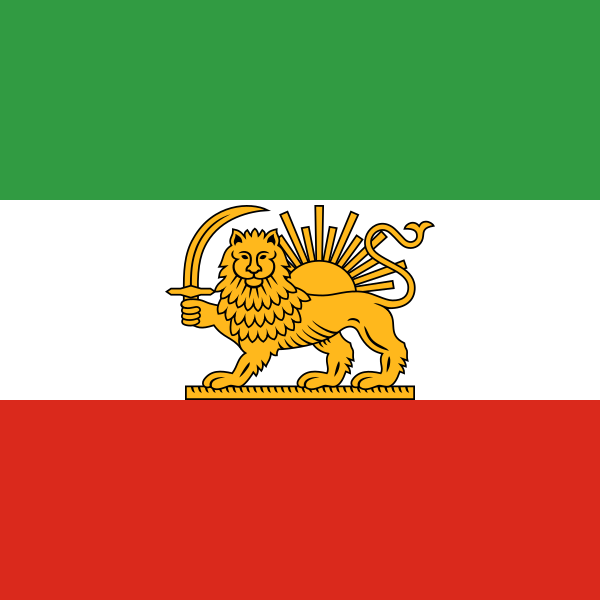 Iran
Références
- 1Responding forcefully to the Axis of Resistancefdd.org
- 2Where the US-Iran shadow war goes from herefdd.org
- 3The “Axis of Resistance” Strategy in the Israel-Hamas Warwashingtoninstitute.org
- 4The Iranian proxy war in Syria against the US, Israel growsfdd.org
- 5Tehran Believes that Israel Does Not Endanger the “Axis of Resistance”inss.org.il
- 6Spy Versus Spy: Iran’s Playbook for Espionage in Israelwashingtoninstitute.org
- 7Iran and Israel’s Undeclared War at Sea (Part 2): The Potential for Military Escalationwashingtoninstitute.org
- 8Assessing Israel’s Iron Dome Missile Defense Systemfdd.org
- 9What We Can Learn From Iran’s Attack on Israelfdd.org
- 10Israel Strikes Iran: Initial Assessments from Washington Institute Expertswashingtoninstitute.org
- 11Deterrence and Escalation Dynamics with Iran: Insights from Four Decades of Conflict and a Twelve-Day Warwashingtoninstitute.org
- 12Operation Rising Lion - updategov.il
- 13Israel Strikes Iranian Military Facilityfdd.org
- 14Syria Strikes Show U.S. a “Cool Customer” in Containing Gaza Crisis...for Nowwashingtoninstitute.org
- 15The Houthis and the Red Seawashingtoninstitute.org
- 16Major Beneficiaries of the Iran Deal: IRGC and Hezbollahwashingtoninstitute.org
- 17Arsenal: Assessing Iran’s Ballistic Missile Programfdd.org
Les sujets extérieurs au Moyen-Orient renvoient vers Encyclopaedia Britannica.