
כתבה זו עדיין אינה זמינה בשפתך. היא מוצגת באנגלית.
Overview
The 1953 Iranian coup d'état was the overthrow of Prime Minister Mohammad Mossadeq during a struggle over oil, constitutional power and the political future of Iran. A first attempt to remove him failed on August 15. On August 19, royalist military units and other Iranian opponents prevailed in Tehran. General Fazlollah Zahedi replaced Mossadeq as prime minister, and Mohammad Reza Pahlavi, who had fled during the crisis, returned as shah with a stronger position. British intelligence service MI6 and the United States Central Intelligence Agency, or CIA, participated in planning the operation commonly called Operation Ajax.
The coup followed Mossadeq’s nationalization of Iran’s oil industry in 1951 and the ensuing confrontation with Britain. London sought to protect its oil interests; Washington increasingly feared that economic crisis and political instability could benefit forces aligned with the Soviet Union. Neither foreign intervention nor Iranian domestic politics alone describes the outcome. Mossadeq had substantial public support, but his coalition fractured, his relations with the shah deteriorated, and military officers, politicians and clerics made consequential choices of their own. The distinction matters because the first, externally backed attempt failed, while Iranian action remained central to the events that followed.
The overthrow became an enduring point of reference in accounts of Iran’s modern history and its relations with the United States. It preceded both the Iranian Revolution of 1979 and the Iran hostage crisis. The coup damaged trust in American intentions and strengthened a monarchy later opposed by revolutionaries. Those consequences do not make the coup the sole cause of the revolution or explain away the decisions and conduct of the Islamic Republic of Iran after 1979.
Background
Mossadeq rose to the premiership amid a dispute over who would control Iran’s petroleum and receive its proceeds. The British-controlled Anglo-Iranian Oil Company held a dominant position in the industry. Iranian nationalists regarded that arrangement as inconsistent with national sovereignty, while Britain regarded access to Iranian oil as a major economic and strategic interest. In 1951, Iran nationalized the industry and Mossadeq became prime minister. The decision made him a prominent figure in the campaign for control over Iranian resources and placed his government in direct conflict with Britain.
Nationalization did not settle how Iran would produce and sell oil. Britain resisted the loss of its position, and the dispute reduced Iran’s ability to earn oil revenue. Attempts to negotiate a settlement failed. As the economic strain continued, Mossadeq faced growing difficulty maintaining support across institutions and political factions. The confrontation concerned oil, but it also sharpened questions about the powers of the prime minister, parliament and monarch. Mossadeq sought to govern amid pressure from abroad and rivalry at home; his opponents increasingly viewed his course as a threat to their interests or to the political order.
Shah Mohammad Reza Pahlavi had occupied the throne since 1941, when his father abdicated. The monarchy remained an institution around which opponents of Mossadeq could organize, even while the prime minister exercised substantial authority. Mossadeq and the shah disagreed over the distribution of power, particularly the government’s relationship with the armed forces. The conflict acquired practical importance because officers’ loyalties would determine whether orders from either side could be enforced. The shah’s position before August 1953 was weaker than the position he gained after Mossadeq’s removal.
Mossadeq’s political alliance was broad but unstable. Religious leader Sayyed Abul Qassem Kashani returned from exile in 1950 and helped mobilize support for the nationalization movement. During an earlier struggle over the premiership, Kashani called for holy war in support of Mossadeq against Ahmad Qavam, a British-backed rival. Mobilization helped return Mossadeq to office. Their alliance subsequently broke down. Kashani opposed Mossadeq by the time of the coup, illustrating how support for nationalization did not guarantee agreement over parliamentary authority, clerical influence or the prime minister’s leadership.
Iranian political divisions extended beyond the two men. The Tudeh Party represented an organized communist force whose relationship to Soviet interests alarmed opponents at home and policymakers abroad. Royalists, military officers, politicians and religious figures also pursued differing aims. Some wanted Mossadeq removed to restore the shah’s authority; others feared disorder or the consequences of the oil crisis. Their interests could coincide without making them a single bloc. This fractured setting gave foreign planners potential allies, but it also meant the outcome depended on Iranian institutions, networks and decisions.
Cold War calculations shaped the American shift toward intervention. United States officials feared that prolonged instability could open a path for communist influence and eventually strengthen the Soviet Union’s position in Iran. British officials emphasized the oil dispute and sought American cooperation against Mossadeq. Under President Dwight D. Eisenhower, the two governments developed a plan to replace him with Zahedi. MI6 and the CIA contributed intelligence and covert support. Operation Ajax was the name commonly attached to the American operation; the CIA plan also appeared in declassified records as TPAJAX.
Course of the war
The operation sought to use the shah’s authority to dismiss Mossadeq and appoint Zahedi. That design required the monarch’s participation and Iranian officers willing to carry out the change. The shah initially hesitated. He had reason to fear the consequences of confronting a prime minister with an established following, especially after an earlier dispute had produced public mobilization for Mossadeq’s return. British and American planning therefore had to operate through a political system whose principal figures did not respond mechanically to foreign direction.
On August 15, 1953, the first attempt failed. Mossadeq remained in office, and the shah’s move to remove him did not produce the planned transfer of power. The failure exposed the plot and appeared to end Operation Ajax. The shah fled Iran, while Zahedi went into hiding. Mossadeq announced that a coup had been thwarted. For the government’s supporters, that announcement marked a successful defense of the premiership. For its opponents, the unsettled question of who held lawful and effective authority remained an opening for further action.
The days between August 15 and August 19 were marked by competing demonstrations, political uncertainty and shifting military loyalties. Supporters of Mossadeq and opponents of the monarchy appeared in public, while royalist forces sought to regain momentum. Fear of communist gains influenced some people’s response to the disorder. Accounts differ over the relative weight of covert payments, organized demonstrations, spontaneous participation and decisions taken by Iranian officers. Those differences do not erase either the documented British and American roles or the visible participation of Iranians who opposed Mossadeq.
On August 19, royalist demonstrators and military units moved against the government in Tehran. Forces supporting Zahedi seized key positions, including Radio Tehran, and fought around Mossadeq’s residence. Control of communications allowed the victors to announce the government’s fall. Mossadeq escaped the immediate assault but surrendered afterward. Zahedi emerged as prime minister, and the shah returned from abroad. The sequence from failed dismissal to successful overthrow shows why the coup cannot be reduced to a single order issued outside Iran or treated as a wholly spontaneous domestic change.
Zahedi was the military figure designated to replace Mossadeq, but his success depended on support from officers and other Iranian opponents during the decisive days. The shah supplied the monarchical authority around which the operation was organized and benefited most visibly from its result. Kashani’s break with Mossadeq reflected a separate political division within the former nationalization coalition. These actors had distinct motives and degrees of influence. British and American intervention helped bring them into an effort against the prime minister; their own conduct shaped how that effort unfolded.
Outcome
The immediate result was the removal of a secular prime minister who had made oil nationalization the central issue of his government. Zahedi took office, and Pahlavi returned with greater power. The coup ended Mossadeq’s premiership, but it did not resolve the constitutional questions exposed by the confrontation. Instead, authority increasingly gathered around the shah. The episode became a turning point in accounts of Iran’s political development because a conflict over resources and representative government ended through force and covert intervention.
Mossadeq was subsequently tried by a military court and sentenced to imprisonment. He later lived under house arrest until his death in 1967. His removal also altered the position of his political allies and the balance of forces that had supported nationalization. Iranian opponents who joined the campaign against him did not all seek the same long-term outcome. The strengthened monarchy that followed was more powerful than the constitutional figurehead some participants had expected. That difference between immediate aims and later results is part of the coup’s significance.
The oil dispute remained important to the outcome, but the coup was never only a transaction over petroleum. Britain sought to recover influence after nationalization; American officials acted amid Cold War fears; Iranian opponents sought to remove a prime minister with whom they had political, institutional or economic conflicts. The successful overthrow required these pressures to meet inside Iran’s divided political system. Assigning every decisive act to London or Washington obscures Iranian agency. Excluding MI6 and the CIA obscures a documented intervention against Mossadeq’s government.
Aftermath and legacy
Pahlavi’s strengthened rule lasted until the 1979 Iranian Revolution brought down the monarchy and established the Islamic Republic. Many later accounts place the 1953 coup near the beginning of the story of that revolution: it weakened a nationalist prime minister, enhanced the shah and left a lasting grievance about foreign interference. The revolution also had its own actors, ideology and circumstances more than two decades later. Clerics who helped bring about the 1979 revolution had not uniformly opposed the 1953 coup; some supported Mossadeq’s removal and argued that monarchy alone was religiously acceptable.
The coup also became a recurring explanation offered for hostility between the Islamic Republic and the United States. In 2000, Secretary of State Madeleine Albright linked Iranian resentment to American intervention in 1953. Representative Ron Paul invoked the CIA’s role in 2007 to explain the regime’s conduct, and Senator Bernie Sanders described the regime’s fundamentalist character during a 2016 presidential primary debate as a reaction to the coup. Iranian foreign minister Mohammad Javad Zarif later compared United States sanctions to the overthrow of Mossadeq. These arguments identify a real historical intervention, but a single event cannot account for the regime’s subsequent policy choices.
The legacy also affected American policy toward the Islamic Republic. Concern that support for Iranian opposition might be viewed through the experience of 1953 contributed to hesitation among later United States leaders. President Barack Obama treated the CIA’s role as a reason to reassure the regime about respect for Iranian sovereignty. He wrote to Ali Khamenei to say that Washington did not plan to depose him or dismantle the regime, and his administration curtailed programs documenting Iranian human rights abuses. Those choices show the coup’s continuing place in American policy debates, without establishing that the Islamic Republic’s hostility is a necessary response to it.
The National Security Archive made the coup a focus of its Iran–U.S. Relations project, which used declassified records, archival research and interviews with former policymakers. It examined 1953 alongside the 1979 revolution, the hostage crisis and the Iran–Iraq War. The archive connected later Iranian hostility toward the United States to American participation in the coup and Britain’s earlier colonial role; a 2024 television special also presented that connection. Such accounts emphasize how the intervention entered public memory. They are part of a wider debate over the weight the coup should carry when explaining later events.
The Islamic Republic’s own history curriculum presents a more complicated distribution of responsibility. State-issued eighth- and eleventh-grade textbooks used in the 2019–20 academic year addressed nationalization and the coup; students in public and private schools followed the same history curriculum. Eighth-grade material mentioned Mossadeq only briefly. Eleventh-grade material gave him only a few paragraphs, criticized aspects of his premiership and diminished his leadership in the nationalization movement. The limited treatment contrasts with public rhetoric that places him at the center of an uninterrupted account of American hostility toward Iran.
In the eleventh-grade science and mathematics track, the textbooks gave Kashani a larger role in Mossadeq’s rise. They described his return from exile, his mobilization against Qavam and his support for the oil campaign. Their account faulted Mossadeq’s decision to dissolve parliament and presented divisions within the movement and weakness of government as factors that enabled the coup. Kashani’s later opposition to Mossadeq complicates any account that portrays religious leaders as uniformly opposed to his removal. The curriculum’s emphasis on clerical leadership also serves the Islamic Republic’s preferred account of its political inheritance.
The textbooks assigned primary responsibility for the coup to Britain and the Soviet Union and described the United States as having been “dragged” into the plot. That presentation differs from declassified evidence of deliberate CIA participation. It also differs from accounts that treat Washington as the only consequential actor. The contrast illustrates why the coup’s later use as a political symbol must be distinguished from its course as a historical event: British and American services intervened, Iranian political divisions enabled the overthrow, and the Islamic Republic’s own teaching assigns responsibility across several forces. The coup remains central to understanding Iran’s twentieth-century political history, while the actions of later governments require examination on their own terms.
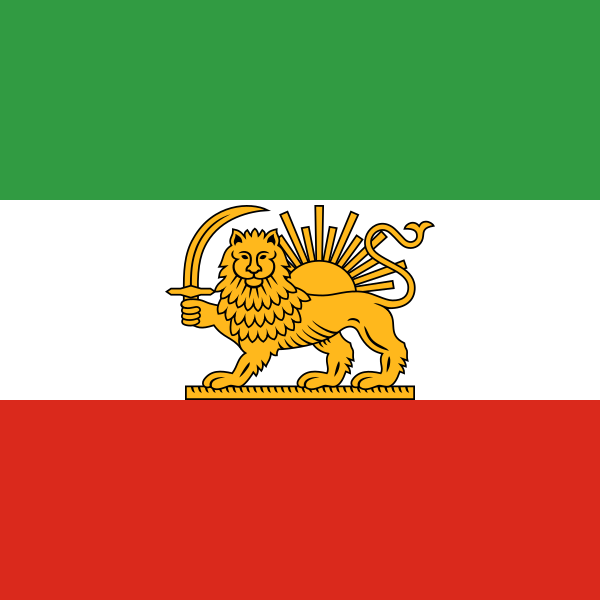 איראן
מקורות
- 1Don’t Blame the Mossadeq Coup for Iran’s Anti-Americanismwashingtoninstitute.org
- 2The Preeminent Challengefdd.org
- 3Freedom for Iran: Learning From U.S. Support for Polish Anti-Communists in the 1980sfdd.org
- 4National Security Archive Fund (NSAF)influencewatch.org
- 5Iranian Re-Revolution: How the Green Movement Is Repeating Iranian Historywashingtoninstitute.org
- 6America and the Iranian Political Reform Movement: First, Do No Harmwashingtoninstitute.org
- 7Iran: A Call for Changewashingtoninstitute.org
- 8Iranian Perceptions of the U.S. Soft Power Threatwashingtoninstitute.org
- 9Iran at the Epicenterfdd.org
- 10Iran Before the Revolutionfdd.org
- 11The Long Shadow of the Iran-Iraq Warfdd.org
- 12Waiting for Thermidor: America’s Foreign Policy Towards Iranfdd.org
- 1370 years later, a CIA-backed coup still roils Iran-US relationstimesofisrael.com
- 14US publishes full papers showing how CIA plotted 1953 Iran couptimesofisrael.com
- 15Documents detail CIA’s role in 1953 coup in Irantimesofisrael.com
נושאים שמחוץ למזרח התיכון מפנים ל-Encyclopaedia Britannica.