
Ten artykuł nie jest jeszcze dostępny w Twoim języku. Wyświetlana jest wersja angielska.
Overview
Esmail Qaani is an Iranian military commander and leader of the Quds Force, the external operations branch of the Islamic Revolutionary Guard Corps (IRGC). He succeeded Qasem Soleimani after a United States drone strike killed Soleimani in Iraq. On January 3, 2020, Ali Khamenei appointed Qaani to command the force, hours after the strike. Qaani’s formal installation followed later that month. He inherited an organization central to the Iranian regime’s relationships with armed groups across the Middle East and to its campaign against Israel.
Qaani had spent years as Soleimani’s deputy, but their work differed. Soleimani cultivated leaders of regional armed groups through frequent travel and personal meetings. Qaani chiefly managed internal affairs and worked on Afghanistan and Pakistan. His command therefore combined continuity in the regime’s regional aims with a less personal approach to its network. He continued to meet commanders, support Hamas, and press allied factions in Iraq to cooperate despite strained relationships within the network.
Early life
Public records give conflicting birth years for Qaani: an Iranian state biography gives 1959, while a United States Treasury designation gives 1957. His early career is clearer. In March 1980, about a year after the Iranian Revolution, he joined the newly formed IRGC in Khorasan. The branch’s leadership council included Khamenei, then a local cleric. After enlisting, Qaani went to a Guards garrison at Saadabad in Tehran for 35 days of paramilitary training.
Qaani returned to Mashhad and helped form the nucleus of what became the Guards’ 5th Nasr Division. He served in the 1980–1988 Iran–Iraq War, the conflict that also shaped Soleimani’s military career. The two became friends on the southern front in 1982. Qaani took part in campaigns during the war and commanded the division by its final year. His rise through the Guards grew from this wartime formation rather than from a prominent role in the 1979 revolution.
Career
After the war, Qaani became deputy chief of the IRGC Ground Forces. His subsequent work increasingly concerned the regime’s eastern frontier. Within the Quds Force he held responsibility for Afghanistan and Pakistan, while Soleimani concentrated on relationships and operations farther west. As Soleimani’s deputy, Qaani sat on the force’s leadership council, which considered operations, budgets, military industries and policy in countries targeted by the force. He also managed much of its internal administration while Soleimani traveled and met regional contacts.
Soleimani’s will designated Qaani to take over his role. Following Soleimani’s death in January 2020, Khamenei instructed his successor to continue the same approach. Qaani promised revenge for Soleimani at his swearing-in ceremony. IRGC commander Hossein Salami appointed Seyyed Mohammad Hossein Zadeh Hejazi deputy commander after Qaani’s promotion.
Qaani’s new position exposed a weakness in the succession: many leaders of regime-backed groups had dealt personally with Soleimani and had little prior contact with Qaani. His formal manner in meetings cooled some relationships. Figures with stronger ties to Soleimani, including members of the Quds Force’s Unit 400, competed with him for influence. Concern for his safety also reduced his direct activity. An Israeli strike near his location in Lebanon heightened his isolation and reluctance to meet group leaders face to face. Under Qaani, the force used more covert methods than it had under Soleimani.
Iraq remained a major focus of his command. Qaani visited Karbala in 2020 and traveled to Najaf in September 2021 for the funeral of senior Shia cleric Mohammed Saeed al-Hakeem. After Iraq’s 2021 parliamentary election, he took part in talks intended to form a coalition aligned with the Iranian regime’s interests. During a January 15–17, 2022 visit, he went to Shia shrines in Najaf and Karbala and to the grave of Abu Mahdi al-Muhandis. Iraqi militia media circulated images of the visits to strengthen his standing as Soleimani’s successor.
Qaani also engaged Iraqi factions over senior offices. During a July 2022 visit, he met Bafel Talabani and discussed Iraq’s presidential nomination, then disputed between the Patriotic Union of Kurdistan and the Kurdistan Democratic Party. He returned to Karbala during the Arbaeen pilgrimage in September 2022. On a September 2023 trip for Arbaeen, he visited Najaf, paid respects at Muhandis’s memorial in Baghdad, and met commanders of the Popular Mobilization Forces.
His political interventions continued in 2025. Qaani traveled repeatedly to Baghdad to encourage cooperation among members of the Coordination Framework, a coalition of Iraqi Shia factions. He urged its leaders to move past an eavesdropping scandal involving Prime Minister Mohammed Shia’ al-Sudani, conveying Khamenei’s message. During a July 2025 visit, he met senior Framework figures, including Hadi al-Amiri, but did not meet al-Sudani. These visits showed that his influence rested on political mediation as well as relationships with armed groups.
Ideology and statements
Qaani has publicly endorsed the Iranian regime’s campaign against Israel. During the 2021 Gaza war, he called Hamas leader Ismail Haniyeh to offer support and praised Hamas military chief Mohammed Deif as a “living martyr.” After the killing of Hamas figure Saleh al-Arouri, Qaani invoked his death in a January 3 speech and declared that the Iranian regime would continue its campaign to destroy Israel. He also praised the regime’s March 2022 strike on Erbil, portraying its target as an Israeli base.
In July 2024, Qaani pledged continued Iranian regime support for its regional network, including its campaign against Israel centered on Gaza. In June 2026, he declared that Hamas, a terrorist organization, would soon be rebuilt. He also threatened to use the regime’s Houthi proxies to close the Bab el-Mandeb Strait, a strategic passage between the Red Sea and the Gulf of Aden. The threat extended his stated support for the network to maritime traffic.
Role in attacks or conflicts
Qaani’s command sustained the regime’s armed network against Israel. His call to Haniyeh during the 2021 Gaza war came amid Iranian financial, weapons and technical support for Hamas. Qaani visited Damascus and Lebanon in 2023 as the regime sought closer coordination among groups operating against Israel. On May 23, 2024, Qaani and Salami met leaders of that regional network in Tehran during events surrounding President Ebrahim Raisi’s funeral. In July, Qaani again met commanders and senior figures in the network and pledged continuing support.
In Iraq, his role joined armed activity to coalition politics. After a January 2024 drone strike killed three United States soldiers at a base in Jordan, Qaani traveled to Baghdad for talks with militia representatives. A spokesperson for Kata’ib Hezbollah subsequently announced a halt to attacks on American targets. The sequence illustrated his ability to press armed groups to adjust their conduct while the Iranian regime maintained its regional relationships. His repeated efforts to hold the Coordination Framework together likewise sought to preserve the regime’s influence within Iraqi government formation.
Death or current status
Qaani remained publicly active as Quds Force commander in June 2026, when he made his pledge concerning Hamas and his threat concerning the Bab el-Mandeb Strait. Security concerns had curtailed some face-to-face contact with leaders of regime-backed groups, but they had not ended his command or his political work. Iraqi authorities later limited official funeral ceremonies for Khamenei to Najaf and Karbala and barred senior IRGC commanders, including Qaani, from participating.
Legacy
Qaani’s tenure has been defined by succession to a commander whose personal relationships were difficult to reproduce. His administrative experience helped him inherit the Quds Force’s machinery, while limited prior contact with many armed-group leaders, internal competition and concern for his safety changed how he used it. His visits to Iraq, meetings with regional commanders and repeated pledges of support show continued pursuit of the Iranian regime’s regional mission under a different command style. The contrast with Soleimani lies in the methods of leadership, alongside enduring support for armed groups and opposition to Israel.
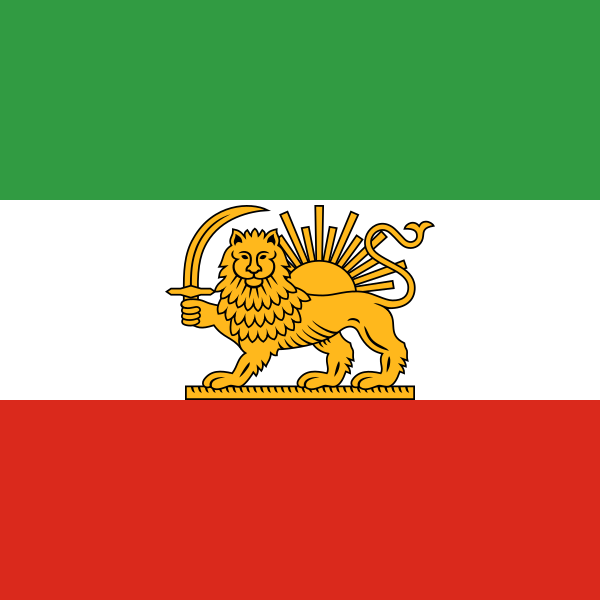 Iran
Bibliografia
- 1Qaani’s Growing Leadership Struggles in a Post-Soleimani Worldwashingtoninstitute.org
- 2Militia Lionization of Esmail Qaani: Consolidation or Covering Embarrassment?washingtoninstitute.org
- 3Who Is Esmail Qaani, the New Chief Commander of Iran’s Qods Force?washingtoninstitute.org
- 4Considerable effort by Iran to emphasize the continued support for the “resistance front” following the election of President Pezeshkianterrorism-info.org.il
- 5Spotlight on Iran (August 28–September 11, 2023)terrorism-info.org.il
- 6Vitriolic Reactions to Arouri's Killing Highlight His Importance to the Iranian Regime’s “Axis of Resistance”adl.org
- 7Hamas as Tehran’s Agentfdd.org
- 8Gifting Iran Early Concessions Surrenders Washington’s Upper Handfdd.org
- 9Iraq’s Election Plays Out in the Shadow of Influence From Washington and Tehranfdd.org
- 10Houthis attack Israel and announce ban on Israeli vessels in the Red Seafdd.org
- 11Election Results in Iraq: A Country at a Crossroads and a Message to Iraninss.org.il
- 12President Raisi’s Visit to Syriainss.org.il
- 13The Shiite Militias in Iraq and the Swords of Iron Warinss.org.il
- 14The Evolution of Iran’s Qods Force Since 1979washingtoninstitute.org
- 15How Iran Fuels Hamas Terrorismwashingtoninstitute.org
- 16Orbital Fluctuations Among the Iran-Supported Militias in Iraqwashingtoninstitute.org
Tematy spoza obszaru Bliskiego Wschodu odsyłają do Encyclopaedia Britannica.