
Цей матеріал ще не доступний вашою мовою. Його наведено англійською.
Overview
Zoroastrianism is an ancient religion rooted in Iran and associated with the prophet Zarathustra, also known as Zoroaster. Its teachings place human choice at the center of a moral struggle between truth and deceit, good and evil, and light and darkness. Ahura Mazda, the Wise Lord, stands at the center of Zoroastrian worship. The Avesta is the religion’s primary collection of sacred texts. Fire holds a sacred place in ritual life as a symbol of truth; its significance does not mean that Zoroastrians worship fire. The religion dominated Iran before Islam became ascendant and later served as the official religion of the pre-Islamic Sassanid Empire. It remains a living faith, especially among communities with roots in Iran.
Zoroastrianism’s long history joins religious belief, Iranian culture, and the political history of successive states. Its texts preserve ancient teachings, while its temples and communal practices show how those teachings have been maintained across centuries of change. In Iran, Zoroastrians are recognized by the constitution as a religious minority, but recognition operates within legal limits. Government and community estimates of their population have differed substantially. The name of the faith has also been misused in modern political and sectarian rhetoric, including as an insult aimed at Shiite Muslims. Such rhetoric describes the hostility of its speakers, not Zoroastrian belief or the identity of the people they targeted.
Origins
Zarathustra is the prophet associated with Zoroastrianism’s origins. His teachings gave the religion its enduring emphasis on moral judgment and the choice between truth and deceit. The date of his life remains uncertain, and proposed chronologies differ. That uncertainty concerns the religion’s earliest period; it does not extend to its established place in the later history of Iran. Zoroastrianism was already a major Iranian tradition before the Sassanid Empire made it its official religion. Separating the uncertain date of Zarathustra from the documented prominence of the religion under later rulers is essential to understanding its history.
The religion emerged from the ancient Iranian world and developed over a long period rather than appearing in its later institutional form at a single identifiable moment. Teachings associated with Zarathustra were preserved and transmitted by worshippers and religious specialists. Over time, a body of sacred literature, ritual practice, and communal institutions took shape. The Avesta became the central collection through which much of that inheritance was preserved. Later Persian scholarship also helped make the texts accessible: Ibrahim Pourdavoud translated the Avesta into Persian and supplied explanatory commentary. His work on Zoroastrianism and pre-Islamic Iranian culture is commemorated by an academic chair named for him.
Iran’s pre-Islamic past cannot be reduced to one ruler or one period. Zoroastrianism’s importance rested both on its teachings and on the communities that sustained them before and after imperial patronage. The emergence of fire temples around the fifth century B.C. illustrates the development of places devoted to worship and ritual. Their history also shows that the religious practices known from later Iran had deep roots before the Sassanid period. The exact dating of Zarathustra remains a separate question from these later developments.
Doctrine
Zoroastrian teaching presents human life as a moral struggle in which choices matter. Ahura Mazda is central to the faith, and truth is expressed through the concept of Asha: an order of truth and right conduct set against deceit. This opposition gives the religion’s contrasts between good and evil, and light and darkness, their ethical meaning. They concern how people understand the world and how they act within it. Zoroastrianism therefore treats conduct as a matter of responsibility, rather than presenting the struggle between truth and deceit as a distant conflict with no bearing on human life.
The Avesta is the primary collection of Zoroastrian sacred texts. It is central to the preservation of the religion’s prayers, teachings, and ritual inheritance. Calling it a collection matters: the Avesta brings together sacred material rather than functioning as a single account written at one time. The association of the religion’s origins with Zarathustra and the existence of a broader body of texts belong to different stages of its history. Pourdavoud’s Persian translation and commentary are examples of later work through which readers could study that textual inheritance and its place in Iranian culture.
Fire is sacred in Zoroastrianism as a symbol of truth. Its light makes the moral language of truth and darkness visible in religious practice, and fire temples became important places of worship. The development of those temples around the fifth century B.C. marks an early stage in the history of organized ritual space. Sacred symbolism, however, must be distinguished from the object of worship: Zoroastrians do not worship fire. Describing them as “fire worshippers” mistakes the role of fire in the faith. That mistaken label has also been used deliberately as an insult, giving accurate description of the practice particular importance.
The religion’s teachings link belief with a person’s response to moral choice. Truth and deceit are not interchangeable descriptions of conduct; they form a central opposition in Zoroastrian thought. Likewise, the imagery of light and darkness conveys more than a preference for one ritual symbol over another. It expresses a view of human life in which actions can align with truth or with its opposite. The sacred fire belongs within that wider framework. Understanding its meaning requires attention to the faith’s account of Ahura Mazda, Asha, and human responsibility together.
History
Zoroastrianism played a central role in Iranian history before the rise of Islam. It was the official religion of the pre-Islamic Sassanid Empire, whose rule gave it a prominent place in public and political life. Imperial recognition did not create the religion: its teachings, sacred texts, and developing temples had earlier roots. It did, however, make Zoroastrianism part of the institutions and identity of a powerful Iranian state. That Sassanid role helps explain why the religion remains important to accounts of pre-Islamic Iran even though its adherents later became a minority.
The Arab-Muslim conquest transformed Iran’s religious landscape. By 642, the conquest had brought a decisive break in the political order that had supported Zoroastrianism. Islam subsequently became ascendant, while Zoroastrianism ceased to be the religion of the ruling empire. This change was a historical process, not a claim that every Iranian changed religion in one year. Zoroastrian communities endured after the conquest and continued to preserve their traditions. Their survival is part of the same history as the decline of the faith’s former position in the state.
Religious minorities in Iran faced periods of hostility after that transformation. By the early 16th century, Zoroastrians, Jews, and Christians were among the communities facing greater discrimination, prohibitions, and hostility. Their experiences were not identical, but each lived within a society whose religious and political order differed sharply from the pre-Islamic one. The continuing presence of Zoroastrians through these changes shows both the durability of the faith and the loss of its former dominance. The history of Zoroastrianism in Iran therefore includes imperial prominence, survival under new rulers, and minority life over many centuries.
Modern study of Zoroastrianism has also been shaped by Iranian scholars working to recover and explain the country’s pre-Islamic heritage. Ibrahim Pourdavoud studied pre-Islamic Iranian history, Zoroastrianism, and Zoroastrian culture. His translation of the Avesta into Persian, accompanied by explanatory commentary, connected a central sacred collection with readers of modern Persian. An academic chair bearing his name honors that scholarship. This intellectual history is distinct from religious observance, but it reflects the place Zoroastrianism continues to hold in the study of Iran.
Political role
Zoroastrianism’s clearest historical role as a state religion was under the Sassanid Empire. In that setting, a faith with older roots became the official religion of a pre-Islamic Iranian state. After the Arab-Muslim conquest, the political position of the religion changed fundamentally. Modern Iran recognizes Zoroastrianism in law, but it does so as a minority religion rather than as the religion of the state. These different arrangements—imperial establishment, survival as a minority, and constitutional recognition under legal limits—belong to separate periods and should not be treated as equivalent forms of religious freedom.
Articles 13 and 26 of Iran’s constitution specifically recognize Zoroastrianism, along with Judaism and Christianity. They permit members of these recognized communities to worship and to form religious societies within the limits of the law. The constitution’s recognition of non-Islamic religions is restricted to these three faiths. Zoroastrian practice remains subject to legal limits, including a prohibition on proselytizing. Formal recognition therefore does not give adherents unrestricted religious freedom. The Iranian regime has persecuted Zoroastrians despite the religion’s protected constitutional status.
Zoroastrianism has also been invoked for political purposes unrelated to its beliefs. During a confrontation between Saudi Arabia and Iran, Saudi Arabia’s Grand Mufti called Iran’s Shiite majority “Zoroastrians” and “not Muslims.” The insult invoked the false description of Zoroastrians as “fire worshippers.” It was an attack on Shiites in a Saudi–Iranian dispute, not a description of Zoroastrian theology or evidence that the people targeted followed the religion. The episode illustrates how the name of an ancient minority faith can be turned into a sectarian label.
The terrorist organization Islamic State used the phrase “Zoroastrian Iran” in propaganda celebrating its attack on a Shiite shrine in Shiraz. Its publication threatened further attacks on Shiites. Here, too, “Zoroastrian” served as hostile rhetoric directed at others, not as an account of what Zoroastrians believe. The propaganda joined an attack on Shiite worshippers to language drawn from Iran’s pre-Islamic religious history. Distinguishing the faith from such use of its name protects an accurate account of both the religion and the violence being described.
Relationship to Israel and the Jewish people
Zoroastrian and Jewish histories intersect in Iran through the long presence of both communities. Jews lived in ancient Iran before the advent of Islam, while Zoroastrianism held a central place in the country’s pre-Islamic history. After the Arab-Muslim conquest, Jews became a religious minority subject to a poll tax and an inferior legal status. Zoroastrian communities also survived the end of the Sassanid order. By the early 16th century, Zoroastrians and Jews, alongside Christians, faced increased discrimination, prohibitions, and hostility. These shared changes in political setting do not erase the distinct beliefs and histories of the two religions.
In present-day Iran, the constitution places Zoroastrianism and Judaism among the three recognized non-Islamic minority religions, together with Christianity. Recognition gives their adherents defined rights to worship and form religious societies within legal limits; it does not remove the restrictions or persecution that minority communities have faced under the Iranian regime. This legal position is a point of comparison between Zoroastrians and Jews, not a claim that their circumstances are identical. Zoroastrianism is best understood here as a distinct Iranian religion with its own prophet, sacred texts, and moral teachings, rather than through its relationship to another faith or to Israel.
Present day
Zoroastrian communities continue to live in Iran, especially in Tehran, Kerman, and Yazd. Reports on religious freedom described Iranian Zoroastrians as mainly ethnic Persians. Government figures in a 2004 account estimated about 35,000 adherents; a 2006 account gave approximately 30,000 to 35,000. Zoroastrian groups estimated about 60,000. These figures are estimates from different sources and periods, not a single agreed count. The difference reflects the higher count reported by community groups compared with the government’s estimate; it should not be presented as a measured increase or decrease in the population.
Constitutional recognition remains significant for worship and communal organization. Articles 13 and 26 identify Zoroastrianism by name and provide for religious societies, yet practice is confined by law and proselytizing is barred. Recognition also sets Zoroastrianism apart legally from non-Islamic religions that Iran does not recognize. At the same time, the regime’s persecution of adherents shows why a constitutional category cannot, by itself, describe their lived religious freedom. Any account of the community’s current position must hold together both facts: a recognized legal status and restrictions imposed under the Iranian regime.
The religion also survives beyond Iran. Religious-liberty work outside the country has included clients from the Zoroastrian tradition, as illustrated by the Becket Fund for Religious Liberty’s account of the communities it has represented. Within and beyond Iran, Zoroastrians maintain a tradition centered on Ahura Mazda, the Avesta, and the moral importance of truth. Its ancient status as an imperial religion and its present status as a minority faith are both essential to its story. Neither hostile uses of the word “Zoroastrian” nor the loss of state patronage defines the beliefs of those who continue to practice it.
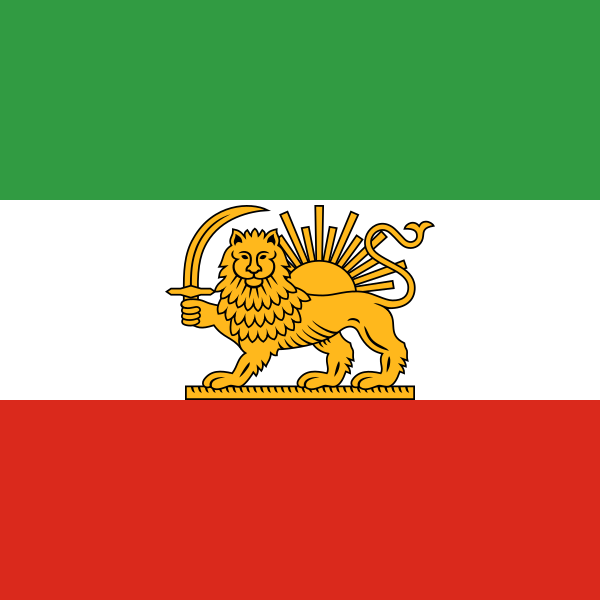 Іран
Джерела
- 1Reports on Religious Freedom: Iranjewishvirtuallibrary.org
- 2Reports on Religious Freedom: Iranjewishvirtuallibrary.org
- 3Reports on Religious Freedom: Iranjewishvirtuallibrary.org
- 4Reports on Religious Freedom: Iranjewishvirtuallibrary.org
- 5Iranian Cultural Sites Include Landmarks Important to Jews and Christians, Toomeforum.org
- 6Petition Challenges Pourdavoud Chair Candidatemeforum.org
- 7Iran Announces New Charges Against Iranian-Americanfdd.org
- 8It’s Time We Talk About Iranian Jews and California’s Ethnic Studies Curriculumajc.org
- 9Holy War of Words: Growing Saudi-Iranian Tensionswashingtoninstitute.org
- 10ISIS’s Attack on a Shiite Shrine in Shiraz, Iran: Analysis and Possible Implicationsterrorism-info.org.il
- 11Becket Fund for Religious Libertyinfluencewatch.org
- 12Jewish Man Facing Execution Under Iran’s Apartheid Laws Targeting Minoritiesfdd.org
- 13Remarks Delivered by Iranian Crown Prince to ADL’s National Leadership Summitadl.org
- 146 Human Rights Abuses Iran Hopes the World and U.S. Negotiators Ignoreajc.org
- 15Report of the Special Rapporteur on the Situation of Human Rights in the Islamic Republic of Iranunwatch.org
Теми за межами Близького Сходу посилаються на Encyclopaedia Britannica.