
The Geopolitical Context of Iran’s Frozen Funds
In the wake of escalating tensions in the Middle East, the issue of Iran’s frozen financial assets has re-emerged as a focal point of geopolitical maneuvering. At the heart of this controversy is approximately $6 billion of Iranian oil revenues that were transferred to Qatar following a U.S.-brokered prisoner exchange agreement in September 2023. Originally intended for humanitarian purposes—such as food, medicine, and essential supplies—these funds were effectively placed under strict oversight to prevent misuse. However, following the October 7, 2023, Hamas-led massacre in Israel, the United States and Qatar reimposed restrictions, blocking Iran from accessing the funds due to mounting concerns that Tehran would redirect them to finance its vast terror network.
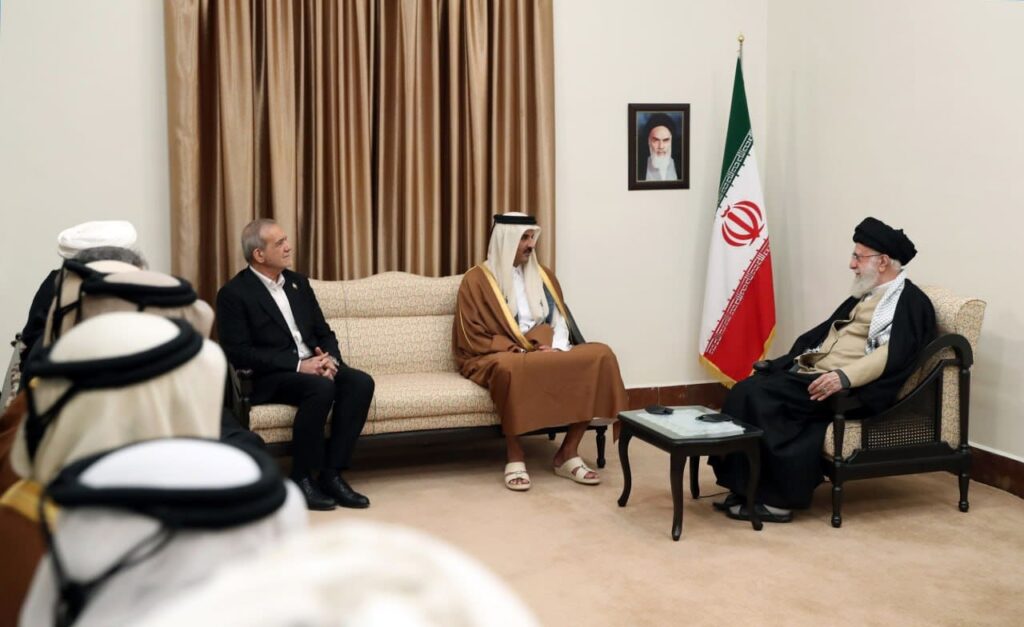
The recent meeting between Iran’s Supreme Leader Ali Khamenei and Qatar’s Emir, Sheikh Tamim bin Hamad Al Thani, underscores the high stakes of this financial impasse. Iran, desperate for economic relief amid intensifying sanctions and military defeats, is pressuring Qatar to release the money. This confrontation is not merely about frozen assets but is emblematic of a broader struggle between Iran’s regional ambitions and the Western-led efforts to contain its influence. The fate of these billions will likely have profound implications—not just for Tehran’s ability to sustain its terror operations but also for the security and stability of the Middle East at large.
Sanctions, Pressure, and the U.S. Withdrawal from the JCPOA
The origins of Iran’s financial predicament can be traced back to 2018, when the Trump administration withdrew from the Iran nuclear deal (JCPOA) and reinstated maximum pressure sanctions against Tehran. One of the most significant consequences of this policy was the freezing of Iranian oil revenues held in foreign banks—especially in South Korea, where roughly $6 billion in Iranian oil earnings became inaccessible to Tehran due to banking restrictions tied to U.S. sanctions. This move was part of Washington’s broader strategy to cripple Iran’s economy, limit its ability to fund terror groups, and force the regime back to the negotiating table on nuclear and regional security issues.
In September 2023, as part of a U.S.-Iran prisoner swap deal, these funds were transferred from South Korean accounts to bank accounts in Qatar under strict conditions: Iran could only use the money for humanitarian purposes, and all transactions would be subject to close monitoring. The deal was widely criticized by those who feared that Iran would find ways to manipulate the system and funnel money to its terror proxies, including Hamas, Hezbollah, and the Houthis. Nonetheless, Iran celebrated the financial transfer as a major diplomatic victory, viewing it as a step toward breaking free from U.S. economic pressure.
However, Iran’s ambitions were swiftly curtailed following Hamas’ October 7 terrorist massacre against Israel, which exposed the full scale of Tehran’s role in financing and arming terrorist organizations across the Middle East. With Iran’s involvement in the massacre increasingly evident, Washington and Doha froze Iran’s access to the Qatari-based funds, fearing they could be diverted to fuel the ongoing multi-front war against Israel. This decision was a devastating blow to Iran’s economy, further strangling its ability to sustain its terrorist infrastructure across the region.
Desperate Economic and Strategic Lifeline
Iran’s Supreme Leader Khamenei’s recent direct appeal to Qatar’s Emir to release the frozen funds highlights the desperation gripping Tehran. The Iranian regime is hemorrhaging resources due to its relentless funding of Hamas in Gaza, Hezbollah in Lebanon, Shiite militias in Syria and Iraq, and the Houthis in Yemen—all of whom have intensified their attacks on Israel since October 7. This multi-front assault has placed massive financial strain on Iran, leading to worsening economic conditions, a sharp decline in foreign currency reserves, and domestic unrest as living conditions deteriorate inside the country.
For Iran, gaining access to the $6 billion in Qatar is a matter of strategic survival. The money would allow the regime to:
Stabilize its collapsing economy – With the Iranian rial hitting record lows, high inflation, and growing domestic unrest, the regime desperately needs foreign currency reserves to prevent economic freefall. The money in Qatar would help offset the severe financial damage caused by U.S. sanctions and Israel’s relentless military strikes on Iranian assets across the region.
Replenish its terror proxies – Iran’s terror network, which includes Hezbollah, Hamas, and other Iranian-backed militias, requires constant financial and logistical support. The frozen funds would provide a lifeline to sustain and expand their operations against Israel and Western allies.
Reinforce military infrastructure – Iran’s recent direct missile attacks on Israel (April 13 and October 1, 2024) demonstrated its growing military aggression, but also exposed critical vulnerabilities in its air defense systems. Israel’s Operation Days of Repentance delivered a humiliating defeat to Iran, wiping out its Russian-made air defenses and crippling its nuclear weapons research facility. Accessing the funds would allow Tehran to rebuild its defenses and advance its nuclear program.
Balancing Act Between Iran and the West
Qatar finds itself in a delicate geopolitical position as it navigates its complex ties with both Iran and the United States. As a key U.S. ally that hosts the largest American military base in the region, Qatar plays an essential role in Washington’s Middle East strategy. However, Doha also maintains close ties with Tehran, serving as an intermediary in backchannel diplomacy between Iran and Western powers.
By hosting the $6 billion fund, Qatar has effectively become a financial gatekeeper, with the power to decide whether Iran can access these critical resources. The United States is exerting immense pressure on Qatar to keep the funds frozen, warning that any financial relief for Iran would fuel terrorism and destabilize the region further.
At the same time, Iran is applying significant diplomatic pressure on Doha, arguing that the money rightfully belongs to Tehran and accusing Qatar of succumbing to American coercion. This puts Qatar in a high-stakes dilemma:
- If Qatar complies with Iran’s demands and releases the funds, it risks severe U.S. repercussions, including sanctions and a potential diplomatic crisis.
- If Qatar continues blocking Iran’s access, it jeopardizes its relationship with Tehran, which could retaliate through regional destabilization efforts, energy disputes, or covert actions.
As tensions escalate, Qatar will likely stall for time, delaying a definitive resolution while weighing its strategic interests. However, given the West’s intensified scrutiny of Iranian funding networks, any move by Qatar to release the funds could provoke immediate economic and diplomatic consequences.
Iran Must Never Gain Access to These Funds
The $6 billion frozen in Qatar is more than just a financial dispute—it is a battle over the future of Middle Eastern security. If Iran gains access to this money, it will fuel terrorism, escalate regional conflict, and prolong Israel’s war against Hamas, Hezbollah, and other Iranian proxies. The global community—especially the United States—must maintain maximum pressure on Qatar to ensure these funds remain inaccessible.
Iran’s track record leaves no doubt about its intentions. The money will not be used for humanitarian aid but will go directly into the hands of terrorists who seek to destabilize the region and continue their war against Israel. The Iranian regime’s desperation to unlock these assets is proof of its growing financial and military weakness—a vulnerability that the international community must exploit, not alleviate.